
LinkedIn source credit
How to attribute a podcast quote on LinkedIn
To attribute a podcast quote on LinkedIn, name the speaker beside the words, then give the show, specific episode, date, direct source link, and a usable passage locator. A profile mention can identify a person; it cannot identify the episode or the passage. Keep the source credit in the post and on any quote card that could circulate separately.
A reader should be able to find the source without opening your private notes or guessing which interview you meant. This guide covers the credit a reader sees after you select a passage. The worked post and card below use an official transcript; neither the recording nor a live LinkedIn post was tested.
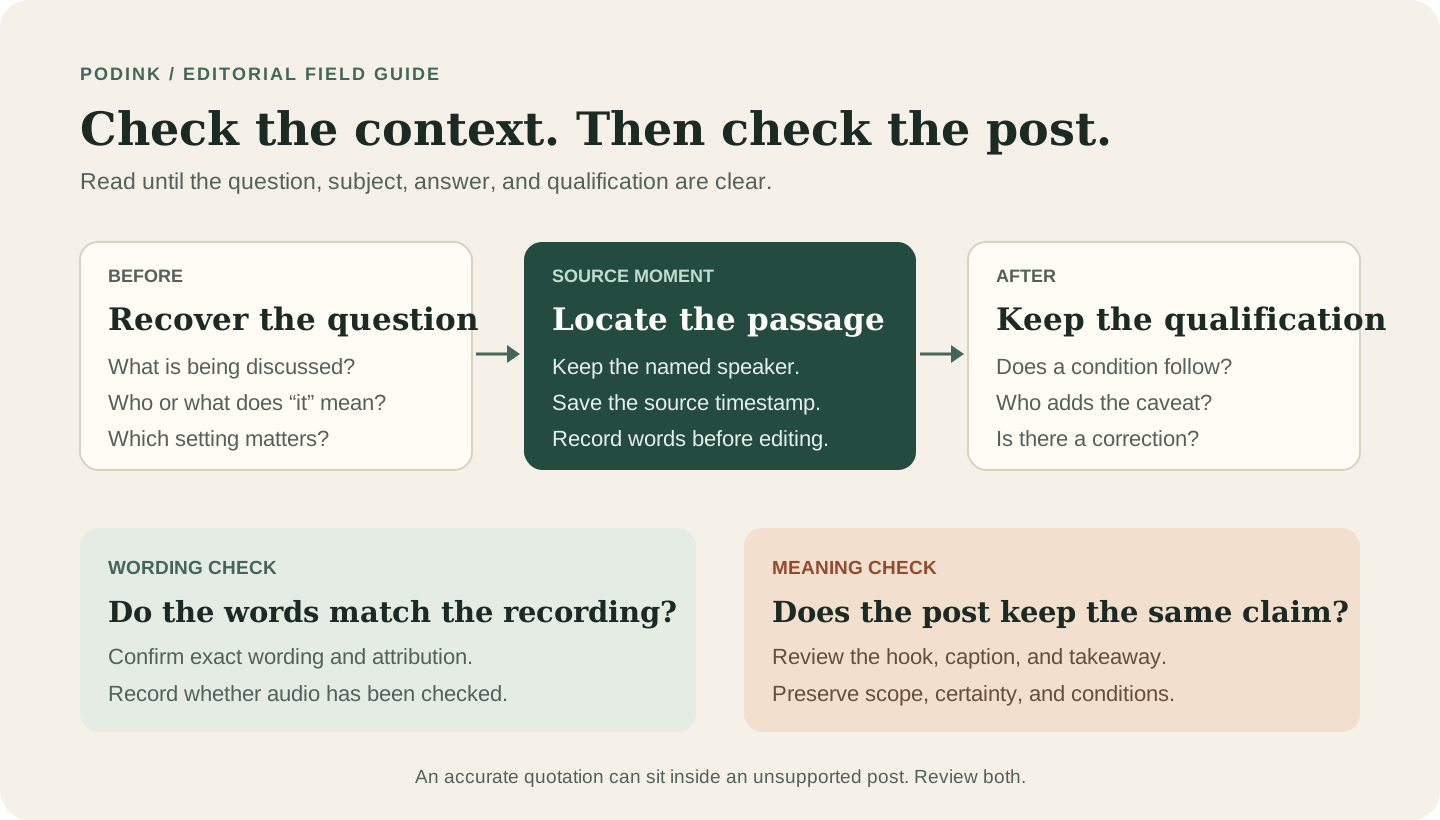
An @mention points to a profile; a citation points to the source
LinkedIn’s Help page says to type @, enter a name, and select the intended person from the suggestions. The selected name links to a profile. Writing a name in plain text is useful credit, but it is not the same action as selecting a mention. Source: LinkedIn’s mention instructions.
LinkedIn notes that members can disable mentions and that it may restrict mentions of people you are not connected with. If you cannot identify or select the right profile, leave the name as plain text and retain the episode link. Do not choose a similar name to complete the tag. Source: Official mention limits.
A mention does not guarantee a notification: LinkedIn’s visibility guidance says members can turn mention notifications off. It also describes removing mentions of people outside a non-Public audience. Keep the written credit intact if a tag is unavailable or removed. Source: LinkedIn’s visibility and notification limits.
Treat the source line below as an editorial format for a readable post. It is not a LinkedIn-required citation style or an academic bibliography. Naming the speaker, identifying the episode, and linking the relevant source serve different purposes.
| Element | What it gives the reader | What it cannot establish |
|---|---|---|
| Speaker name or selected profile mention | The person you are crediting. | Which appearance or passage supplies the quoted words. |
| Episode identity and direct URL | A specific source to reopen. | That the quote is accurate or approved for reuse. |
| Passage locator and review status | Where to look and what kind of source you checked. | Verified audio timing when you only read a transcript. |
A real passage, with a transcript-only boundary
The worked package uses TED’s Rachel Botsman transcript, specifically the late answer about an organization becoming trusted. Source: Official episode transcript.
TED says the transcript may differ from the final audio. This review used the text only. Source: Passage and transcript warning.
The complete LinkedIn draft is an unpublished AI-assisted teaching example. Its proposed customer-service review is the illustrative writer’s suggestion, not a tested method or a recommendation attributed to the guest. No @mention is embedded or claimed to work.
Complete LinkedIn teaching draft
Copy the post with its source footer attached
Adapt the first-person proposal only if you endorse it. The source wording is explicitly presented as a transcript quotation; do not relabel it as recording-verified.
An impressive welcome is not the whole customer experience.

Asked how an organization can become trusted, Rachel Botsman’s answer in TED’s published transcript begins: “Consistency is an easy one.” She points to uneven service between the welcome and departure.

My proposed review: compare what we promise at signup with the first support reply and the cancellation instructions. I would look for a promise that disappears after the sale, then decide what needs changing. This is my application, not a tested method from the episode.

Source: Rachel Botsman with host Chris Duffy, How to Be a Better Human (TED), 3 March 2025.
Episode: How to trust in times of uncertainty (w/ Rachel Botsman).
Find the late question about an organization becoming trusted; the quoted sentence opens the answer. Transcript-only; recording not checked.
https://www.ted.com/podcasts/how-to-trust-in-times-of-uncertainty-rachel-botsman-transcript
Credit the source
Build a source trail a reader can use
Name the speaker close to the quotation
Keep the name and quoted words together in the body. If the speaker’s identity or meaning remains uncertain, resolve that before formatting the credit. A polished footer cannot repair the wrong speaker or a misleading excerpt.
Link the source you actually inspected
Use the specific episode or transcript URL rather than a show homepage or guest profile, so the reader does not have to search an interview archive. State when the quotation comes from a published transcript. Open the link and follow your own locator to the selected passage.
Add a locator without inventing a time
Use a supplied source marker when one exists, and describe what it locates. Otherwise name the question, section, or turn and the selected sentence’s position within it. Keep the locator beside the link. Do not present a transcript marker as an exact audio start time.
Treat a mention as an optional addition
If you want a mention, inspect the suggested profile before selecting it in the composer. If identity is unclear or selection is unavailable, use the person’s written name. Retain the source footer either way; no mention is necessary for that recovery trail.
Check the card as a separate object
Review the graphic without its caption. Preserve the speaker, show, specific episode or date, and a readable source route on the asset. Then check the post still includes the full direct link. Do not rely on a comment or profile tag as the only place the source exists.
Quote-card handoff
Make the quote card recoverable when the caption is missing
This is a text handoff for a proposed graphic, not a generated card or a published asset. Copy the first four rows onto the card. Keep the final row in the editorial handoff, outside the public post.
| Placement | Text or instruction | Purpose and limit |
|---|---|---|
| Card context and quote | On organizational trust “Consistency is an easy one.” | Keep the subject label visibly beside the quote; the short sentence’s reference to one needs the question’s topic. |
| Speaker credit | Rachel Botsman · from the published transcript | Plain-text credit survives even when no profile mention can be selected. |
| Episode identity | How to Be a Better Human · TED How to trust in times of uncertainty (w/ Rachel Botsman) · 3 March 2025 | The show and episode identify this appearance. Credit the speaker without making the card look like an official TED graphic. |
| Source route | https://www.ted.com/podcasts/how-to-trust-in-times-of-uncertainty-rachel-botsman-transcript | Include the readable URL in the design; it is not a clickable link inside an image. The accompanying post should repeat it as text. If the source cannot fit legibly, change the layout or use a text post. |
| Internal source note | Source: https://www.ted.com/podcasts/how-to-trust-in-times-of-uncertainty-rachel-botsman-transcript Locate Duffy’s late organizational-trust question; the quote opens Botsman’s answer, before the question about a lower-power employee. | Source text checked; recording not checked; no timestamp supplied; exact media bounds unknown. Final card file/version and human publication reviewer: pending. |
Recovery test
“Remove the caption. Can a reader still identify and find the source of the card?”PodInk editorial recommendation
A saved card can reach a reader with none of the post around it. Give that reader the episode identity and a readable URL on the asset; keep the clickable URL in the post. The internal note serves the next editor by preserving the exact text location and unfinished checks.
For this example, the card’s context label is editorial wording, not part of the guest’s quoted sentence. A quotation and credit can still mislead if the graphic removes its subject or suggests an endorsement. Recheck the final exported asset, not only the design brief.
The teaching package remains a local draft. Human publication approval, final asset review, and any recording-dependent use remain pending. A source trail makes a claim inspectable; it does not validate the claim.
Compare how the approved core changes in the LinkedIn workflow and the X workflow.
Reader recovery check
Test the credit after separating the post and card
| Failure | Why a reader gets stuck | Repair |
|---|---|---|
| Only a guest profile is linked | The reader cannot tell which interview contains the words. | Keep the profile optional; add the specific episode/transcript URL and locator. |
| Only a show homepage is linked | A show may contain many appearances and episodes. | Link the actual page inspected and retain the episode identity in text. |
| Source exists only in a comment | The post or copied card does not carry the source with it. | Put the recovery trail in the main post and the asset credit; comments may add detail. |
| Card says “source in caption” | The direction stops working when the caption is missing. | Put the speaker, episode identity, and readable source route onto the card. |
| Footer says “listen at” with a guessed time | A fabricated locator sends the reader to an unverified place. | Use the real text locator and label the transcript-only review. |
- The quotation names the correct speaker beside the words.
- The footer identifies one episode, rather than only the show or guest.
- The URL opens the exact source inspected and the locator finds the passage.
- Removing any @mention leaves understandable plain-text credit.
- The card remains identifiable without its caption, and its source text is legible.
- The copied post retains the direct URL, source status, and writer/source boundary.
- The reviewer checks the final asset and wording after edits, not a prior version.
Evidence limits
What has and has not been checked
- No recording was reviewed; voice, delivery, and exact media boundaries remain unverified.
- The post and card brief are original teaching examples. Neither was posted to LinkedIn, tested in its composer, endorsed by the participants, or measured for engagement.
- The credit layout is PodInk’s editorial recommendation. It does not establish reuse permission, endorsement, or an exception to any applicable rights requirement.
- LinkedIn Help was checked for mention behavior. Individual accounts and audience settings may prevent a mention; this guide does not guarantee a notification, distribution, or reach.
- A recoverable citation does not establish that a speaker’s advice is true or effective. The proposed service review has not been tested.
Human review remains necessary. No repurposing workflow can turn weak evidence into a strong claim.
FAQ
Frequently asked questions
What if I cannot tag the podcast guest on LinkedIn?
Credit the guest by their written name and retain the specific source URL, episode identity, and locator. Do not select an uncertain profile. A mention is optional; the source trail should work without it.
Does the quote card need the source if the post already links it?
Keep a readable credit on the card because it can be separated from the post. Include the speaker, show, episode identity, and a source route; repeat the direct URL in the accompanying text so readers can open it.
Can I call a transcript quotation a verified audio quote?
No. Say it comes from the published transcript when that is what you checked. Review the recording before claiming audio verification or giving precise media boundaries. A source footer cannot supply missing evidence.
Evidence
Sources and comparison pages
- Rachel Botsman episode transcriptTED / How to Be a Better Human
- Mention people in your postsLinkedIn Help
- Visibility of mentions and tagsLinkedIn Help