
A handoff checklist for a batch of content
Podcast Content Repurposing Checklist: Source to Approval
A podcast content repurposing checklist should identify every deliverable, its exact version, the source record it uses, and the decision still needed. Keep evidence review, requested changes and publication approval separate. A checked source note does not approve every post or clip made from it.
Use this checklist when several outputs from one episode are ready to hand off. For each post, thread or proposed clip, record what exists, what is blocked and who needs to act next. The blank record and filled example below show how to request a decision without treating the whole episode as approved.
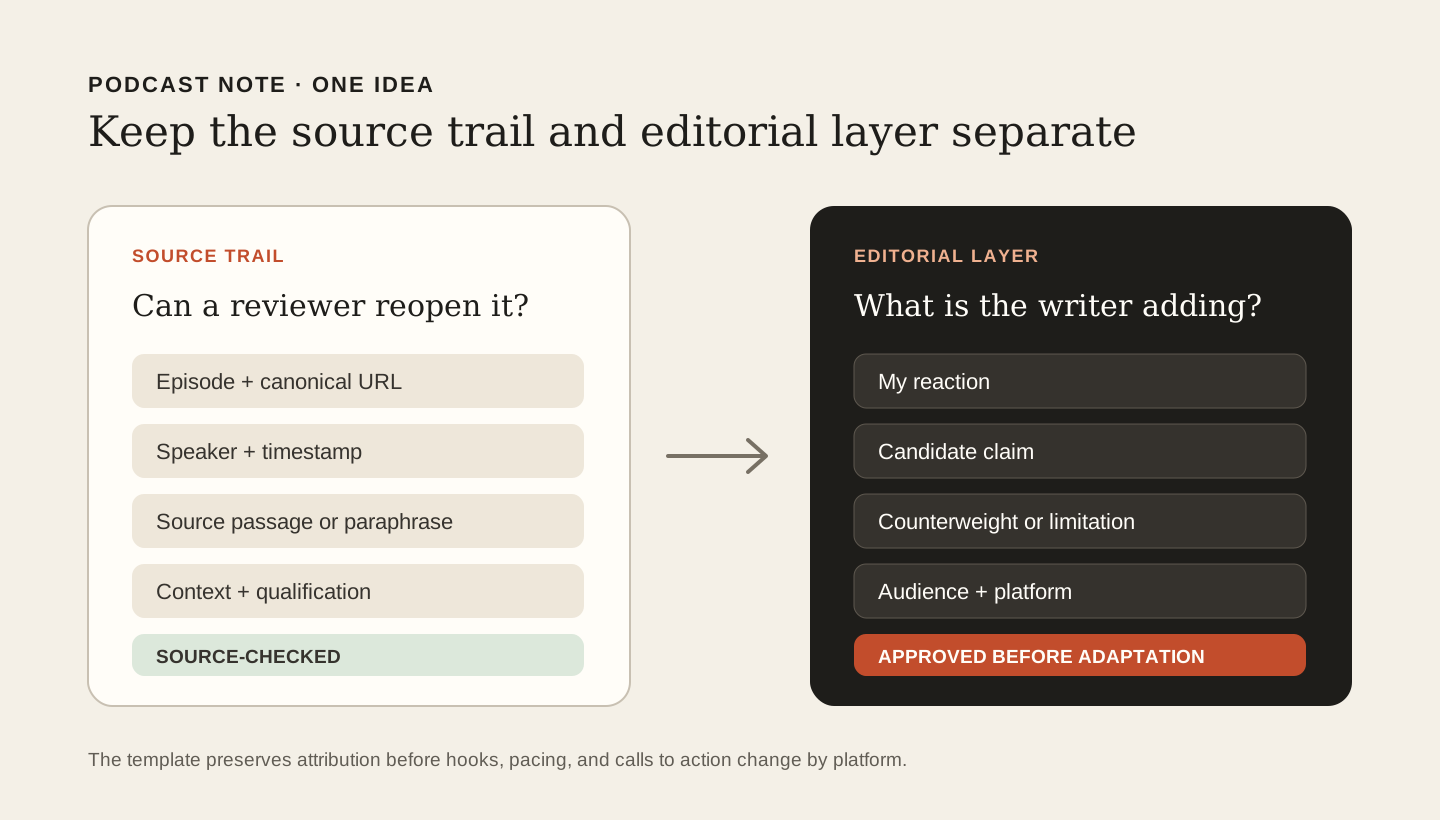
Make the unit of approval smaller than the episode
Give each requested output its own row. Identify the full text or file, destination and version. For a thread, the artifact includes every post in order; for a clip, include the media export, captions and accompanying copy. A filename such as final does not explain what was reviewed.
Keep the source packet shared, but keep output decisions separate. A source packet contains the recoverable passage and completed checks. A deliverable record says how that evidence is used. An action record names unfinished work. The approval record identifies the exact output that a person may authorize.
| Record | What it contains | Question it answers |
|---|---|---|
| Shared source packet | Source ID/revision, URL, locator, evidence checks and limits. | Which evidence can the next editor reopen? |
| Deliverable | Asset ID/version, exact text or file, intended account/channel, source dependencies. | What precisely is being reviewed? |
| Open action | Issue ID, affected assets, owner, next action, due point and closure evidence. | What stops those assets from moving forward? |
| Publication decision | Decision, named approver, scope, timestamp and exclusions. | Which exact versions may be published, where? |
The source used in the filled record
The example reuses the NASA source from our fact-check guide, freshly read for a different handoff exercise. NASA’s Curious Universe episode published December 14, 2021 includes Rudi Albat describing a prelaunch team readiness discussion. Find his turn after Padi Boyd introduces the meeting before launch. Source: NASA official transcript, team-readiness passage.
Only the official text was reviewed. The social drafts below contain an attributed paraphrase and the writer’s own editorial advice. No recording was played, and no clip exists. NASA supplies the historical reading material; it does not endorse this checklist or establish that editorial handoffs improve because of it.
Teaching assignment: prepare a LinkedIn text post and an X thread; consider a clip separately. W means writer, E means editor and P means publication approver. These are fictional role labels, not named people who performed reviews. No human approval or publishing action is claimed.
Copyable blank record + filled teaching record
Copy a batch record, then repeat the asset and action blocks
Use the blank block for your own batch. The filled block refers to the complete teaching drafts below. An unassigned owner or pending decision is a valid value; do not fill it with a person or date you have not confirmed.
BLANK RECORD
BATCH: [ID / purpose / requested outputs]
ROLES: [writer / editor / publication approver; unassigned if unknown]
SOURCE: [ID + revision / URL / retrieval date / passage locator]
CHECKS: [method / reviewer / date / scope / unresolved limits]

ASSET (repeat for each output)
ID / VERSION: [stable asset ID / exact revision]
CONTENT: [saved full text or file reference; include thread order and attachments]
DESTINATION: [account / channel / intended use]
DEPENDS ON: [source revision / other asset versions]
REVIEW STATE: [draft / ready for review / changes requested / held]
OPEN ACTIONS: [issue IDs or none]
PUBLICATION: [pending / approved / rejected; decision maker / timestamp]

ACTION (repeat for each unresolved item)
ISSUE / AFFECTED ASSETS: [ID / exact versions]
OWNER / NEXT ACTION: [person or unassigned / concrete task]
DUE / CLOSE WHEN: [agreed time or milestone / evidence needed]

DECISION REQUEST: [exact asset versions and destinations]
EXCLUDED: [held, omitted or superseded versions]
DECISION RECORD: [pending, or actual decision / approver / timestamp / scope]
PUBLICATION RECORD: [not scheduled, or actual schedule / published URL]
CHANGE LOG: [old → new revision / affected checks / resulting decisions]

FILLED TEACHING RECORD — NOT A REAL CLIENT APPROVAL
BATCH: WEBB-TEACH / editorial handoff example / LinkedIn text + X thread; clip optional.
ROLES: W writer / E editor / P publication approver; all unassigned teaching roles.
SOURCE: S-A / NASA official transcript / retrieved 2026-10-09 / publisher revision not stated.
URL: https://www.nasa.gov/podcasts/curious-universe/webb-space-telescope-go-for-launch-with-esas-ariane-5-expert/
LOCATOR: Rudi Albat’s team-readiness turn after the host introduces the prelaunch meeting.
CHECKS: AI-assisted text comparison on 2026-10-09: the LI-A / X-A paraphrase matches the inspected passage; writer advice is separate. Recording unreviewed.
LI-A: LinkedIn text below / intended account unassigned / depends on S-A / ready for human review.
X-A: Entire thread below / intended account unassigned / depends on S-A / ready for human review.
CLIP-A: Proposal only, no export / destination undecided / depends on S-A + unreviewed recording / held.
ISSUE E-L: LI-A / owner E unassigned / review text, attribution and author-added advice.
ISSUE E-X: X-A / owner E unassigned / review the full thread, source-link display and author-added advice; platform preview pending.
E-L / E-X DUE: Before requesting that asset’s publication; close separately with reviewer, version, method and result.
ISSUE P: LI-A + X-A / owner P unassigned / name destination account and decide on exact versions after its editorial action closes.
P DUE / CLOSE: Before scheduling / record explicit approval or rejection, scope and time.
ISSUE M: CLIP-A / media reviewer unassigned / decide whether to make it; if retained, review recording and export.
M DUE / CLOSE: Before adding a clip to this batch / reviewed media package, or explicit exclusion.
REQUEST: After E-L / E-X close for their respective assets, request separate publication decisions on LI-A and X-A for named accounts.
EXCLUDED: CLIP-A; no permission to add media or substitute a later text version.
DECISIONS: All human publication decisions pending; no approver or approval timestamp exists.
PUBLICATION: Nothing scheduled or published in this teaching assignment.
CHANGE LOG: Initial teaching versions only; the later change drill is hypothetical.
Handoff method
Move each deliverable to a specific decision
List the actual deliverables
Start from the requested outputs, not every format an episode could become. Mark an unmade artifact as a proposal and link each created asset to its complete saved version. A reviewer can then consider the standalone text while seeing that the optional clip still needs work.
Attach prerequisite checks
Reference the source-note revision and claim-review record used by each asset. Record the method and limits of those checks. If a required check is missing, create an action item. Evidence that supports a paraphrase does not establish exact spoken wording or approve a media export.
Give each blocker an owner and a closing condition
Replace “please fix this” with the affected asset, its version and the change or evidence needed. Record the owner and agreed due point so the next person knows how to close the task. Leave the owner unassigned until someone accepts it.
Ask for a scoped publication decision
After required reviews close, request approval of specific versions for named destinations. List excluded assets beside the request. Record the decision maker and time only after the decision happens. An unanswered request or completed fact check leaves publication pending.
Archive the decision and the exact copy
Save the reviewed text or file with its decision. If publication is later authorized and performed, record what was scheduled or published separately. Compare the outgoing version with the approved one; edits after approval create another review decision.
Public source, invented editorial assignment
A filled batch can contain ready text and a held clip
The following social copy is original teaching material. The two text artifacts are complete drafts for review; CLIP-A is only a proposal. Reading this example does not approve, schedule or publish any of them.
LI-A — complete LinkedIn teaching draft; text only, with the source link immediately after it.
A checklist can be finished while a decision is still open. In NASA’s Curious Universe archive, Rudi Albat describes a team readiness discussion before launch. My editorial takeaway: finish the checks, then name who decides on the exact content going out. A reviewed source note, a social post and a media export each need a clearly scoped decision. Source: NASA official transcript, team-readiness passage.
X-A — complete two-post teaching thread; no image or clip attached. Keep the order and the source link with the first post.
Post A: In NASA’s Curious Universe archive, Rudi Albat describes a team readiness discussion before launch. My editorial takeaway is about handoffs: a completed checklist still needs an explicit decision. Source: NASA official transcript, team-readiness passage.
Post B: For a podcast content batch, I would record each deliverable, version, destination and open action before asking for approval. Keep a clip on hold if its media review is unfinished. That is my proposed editorial practice, not a claim made by NASA.
| Deliverable / version | Dependency and review state | Next action / decision |
|---|---|---|
| LI-A · LinkedIn text | Source S-A; full text exists; AI-assisted text comparison only. | E-L: review the full draft. P: select the account and decide after its editorial action closes. Publication pending. |
| X-A · complete X thread | Source S-A; both posts and link form one artifact. | E-X: review sequence, nearby credit and writer-added advice. P: decide on the entire version for the named account. |
| CLIP-A · proposed clip | Source S-A plus recording; no reviewed recording, export or captions. | Held under M. Omit from the text decision request unless a separate reviewed media package is later supplied. |
The batch-level decision
“Approval can cover selected deliverables. The decision should list both the exact versions included and the artifacts that remain on hold.”PodInk editorial recommendation, not a podcast quotation
After the relevant editorial action closes, use this request for that asset: “Please decide on LI-A for the account named in its record: approved, changes requested or rejected. X-A and CLIP-A are excluded from this request.” Send a separate request for X-A after E-X closes. These are sample instructions; no message was sent.
If P approves only LI-A, record that actual decision against LI-A and its destination. X-A stays pending; CLIP-A stays held. Do not change the batch to approved without preserving those exclusions. This conditional example does not claim that an approver has made that decision.
For a solo workflow, the same person may fill the roles. Keep the decisions separate anyway: finishing your source check, resolving your edits and choosing to publish are different actions. No extra team member is required to use the record.
The handoff now shows the next decision for each output: text awaiting human review, an optional clip held, and a task that explains how each can move forward. The example reports no actual client approval or publishing result.
Compare how the approved core changes in the LinkedIn workflow and the X workflow.
Change review
Reopen the affected deliverables when something changes
| Change | What remains usable | What must reopen |
|---|---|---|
| X-A becomes X-B with a new closing recommendation | S-A and LI-A, if their content and intended use are unchanged. | Create X-B, name the changed recommendation in the action record, and review the complete thread. Obtain a decision on X-B; any X-A approval remains historical. |
| A correction changes source packet S-A to S-B | The old packet and all decision records stay in the archive. | Locate LI-A, X-A and CLIP-A through their source dependency. Assess each affected claim or selection before a new decision. |
| A clip export is finally supplied | The text records and source packet can be reused as inputs. | Review that exact export, captions and accompanying copy. Give the media package a new version and its own decision. |
| An approved text moves to a different account or use | Unchanged source evidence and earlier decision history. | Confirm the new destination and use; save an approval covering that scope before scheduling. |
- Every requested output has a row, or an explicit exclusion.
- Every created artifact has an exact version and full text/file reference.
- Source dependencies identify the revisions used by each artifact.
- Evidence review, media review and publication decisions retain separate scopes.
- Every open action names affected assets, owner, next step and closure evidence.
- Publication requests name the version, destination and excluded artifacts.
- A recorded approval belongs to a real decision; unknown people and times remain unassigned or pending.
- The outgoing copy matches the approved version; subsequent edits reopen the affected decision.
What this example establishes
Keep the evidence and approval limits visible
- NASA’s official transcript was read as text only. No spoken quotation, recording, exact media timing or clip export was verified.
- The social drafts, batch identifiers, role labels and conditional decisions are teaching examples. No human reviewer has approved these artifacts and no external message was sent.
- The checklist is an editorial proposal, not an industry standard, a legal clearance process or evidence of fewer errors, faster approval or better social performance.
- A completed source or claim check is an input to publication review. It cannot grant publication permission for a new asset, version or destination.
- Neither text draft was pasted into a social platform. Destination accounts, final link display and platform layout remain to be checked; the example is not a tested publishing package.
Human review remains necessary. No repurposing workflow can turn weak evidence into a strong claim.
FAQ
Frequently asked questions
Can I use one approval for the whole episode?
Only if the recorded decision explicitly identifies the included artifact versions and destinations. An episode label alone does not tell another editor which text, thread order or media export was approved. Keep exclusions visible.
Does a held clip block the text posts?
Decide from the dependency. A standalone text post may be reviewed separately. A caption that only makes sense with the missing clip still depends on that media package. An authorized person must decide whether to release a partial batch; the checklist does not decide for them.
What should I do with a “looks good” reply?
Attach the reply to the version the person actually saw and confirm its scope if unclear. Ask which deliverables and destinations the decision covers. Do not extend an ambiguous reply to an unseen revision or unreviewed clip.
Where should I keep this record?
Use a document, spreadsheet or task system your reviewer can access. Link to the saved artifacts and keep earlier decisions recoverable. The record does not require a particular approval tool.
Evidence
Sources and comparison pages
- Webb Space Telescope: Go for Launch with ESA ExpertNASA — official podcast transcript, published December 14, 2021