
Podcast clip context
How to add context to a podcast clip before the cut
To add context to a podcast clip, assign each missing detail to the right place. Keep any condition, correction, or speaker exchange that changes the claim inside the excerpt. Use a clearly labeled editorial title for orientation and attached copy for attribution and the source link. If the excerpt gives the wrong impression, revise the cut before polishing its caption.
Review the selected media with the attached post hidden. A viewer should still understand its subject and the limit of its claim. The worked example below is a transcript-based editing plan, not a finished clip: no recording, timed captions, or exact cut boundaries have been verified.
Which context belongs in the clip, and which can sit outside it?
First recover the passage’s meaning using the quote-context guide in Continue reading. Then make a placement decision. A detail can be true and still be in the wrong place: a condition buried in the post text does not reach someone who only receives the video.
AP’s published standards require audio and video editing to preserve the speaker’s meaning. AP also has specific restrictions on internal soundbite edits. The placement rules below are PodInk’s editorial recommendations, not a claim that every publisher follows AP’s production policy. Source: AP editorial standards.
| Context needed | Where to put it | Reason and boundary |
|---|---|---|
| A condition, exception, or correction | Keep the relevant source speech in the clip with the claim it limits. | An overlay or external note must not be used to make an otherwise misleading excerpt seem acceptable. |
| A question that determines what the answer means | Keep the question, or enough of the exchange to preserve its premise and speaker ownership. | A yes, refusal, or qualified answer may change meaning when attached to a rewritten question. |
| An unambiguous topic, name, or role | A clearly labeled editorial title or speaker label can orient the viewer. | The label identifies existing context. It must not add an endorsement, result, or missing argument. |
| Episode credit and a recovery link | Keep source credit in the package and the full link in the attached copy. | Use a visible show/speaker credit where useful; the link is a way to inspect the source, not a substitute for meaning. |
| Background unrelated to the selected point | Omit it or direct interested viewers to the episode. | Do not extend a clip with every surrounding detail when the selected thought is already complete. |
Keep editorial setup separate from timed captions
W3C describes captions as synchronized text for speech and the non-speech audio needed to understand the media. W3C also warns that automatic captions require accuracy review. A title you write to explain the topic is a different layer. Source: W3C captions guidance.
Label an added setup as an editorial summary, not a speaker quotation. Keep it visually distinct from the timed caption track. Never put your new explanation into the transcript as though the speaker said it.
For an audio-only excerpt, a visual card cannot provide missing spoken context. Retain the necessary source setup or choose another excerpt. A separate spoken introduction would be newly recorded editorial narration and would need its own attribution and review.
When a pronoun has a clear referent in the source, a topic label may help orient the viewer. When the referent is disputed or changes across turns, keep the relevant exchange. Do not silently replace the speaker’s pronoun in timed captions with your interpretation.
A real passage with a qualification that must survive
Stanford published Three Guiding Principles for Successful Communication on 2023-02-15. In its Think Fast, Talk Smart transcript, locate Caller 3, Anish, and Matt Abrahams’s complete reply before Caller 4. Source: official Stanford transcript.
Anish asks about urgent feedback to a colleague. Abrahams offers collaborative framing, then distinguishes situations requiring an immediate, direct response. Those are different parts of the same exchange, not interchangeable advice.
Source status: transcript-only. The locators identify written turns; they are not media in/out points. The following bad and repaired packages are original editorial plans. No excerpt has been cut or tested with viewers. The source supports the comparison of meanings; this guide does not test the effectiveness of the feedback advice.
Rejected package: a title card cannot rescue the missing qualification
The proposed package below is deliberately flawed. Its hook is our invented rejected wording, not a quotation from the episode. No one is alleged to have published it.
| Package element | Proposed treatment | Why the plan fails |
|---|---|---|
| Selected material | Keep only the part about inviting collaboration. Remove the caller and the later qualification. | The choice discards the part that limits the advice. |
| Editorial hook | Always turn difficult feedback into a question. | The word always claims more than the selected exchange supports. |
| Attempted caption repair | Put a note about exceptions in the attached post. | The video can still communicate an unconditional instruction when the post text is hidden. |
| Decision | Reject this selection. | A better written disclaimer does not approve an excerpt whose central impression remains wrong. |
Repaired package: expand the selection, then add orientation
Start the media review with the complete question and response. Mark the required units below before shortening anything. If the full thought will not fit the chosen format, choose a different passage or publish an attributed text discussion instead.
| Package element | Proposed treatment | Acceptance condition |
|---|---|---|
| Media selection | Retain the question, the proposed approach, and its exception in the original order. | A reviewer confirms the relevant setup and qualification survive in the actual recording and export. |
| Editorial setup card | Editorial summary: Choosing how to respond to a colleague. | Keep this added orientation distinct from the speaker’s timed words. |
| Speaker labels | Caller: Anish / Response: Matt Abrahams. | Verify voices against the recording; do not assign the caller’s concern to the respondent. |
| Attached copy draft | A question and a qualified answer on workplace feedback. Full discussion: Stanford’s Think Fast, Talk Smart. | Attach the source URL in this guide’s Sources after matching the copy to the reviewed export. |
| Cut and caption status | Exact in/out points, timing, and final wording: pending. | Do not estimate a duration from the transcript or mark the package ready because its text is complete. |
Copyable clip context handoff
Copy the filled context handoff into the editing task
Use this filled brief so the next editor does not have to guess which context can be cut. Replace the source for your own episode and keep unknown media fields pending. A finished brief is an instruction for review, not evidence that the recording was checked.
SOURCE AND PURPOSE
Source URL: https://www.gsb.stanford.edu/insights/three-guiding-principles-successful-communication
Written locator: Caller 3 and the response before Caller 4
Purpose: preserve the boundary of the advice in the exchange
Evidence checked: official transcript only

CONTEXT PLACEMENT
Must remain in source media: question, approach, and exception in their original order
Editorial setup: use the labeled card in the replacement plan
Speaker ownership: verify both voices; keep question and answer distinct
Attached text: use the replacement copy only with a matching reviewed export
Must not imply: the rejected always-rule

MEDIA REVIEW
Original recording URL/version: pending; the source page is not a reviewed media file
Exact in/out points: unset; establish by playback
Internal cuts/reordering: none approved; document any later proposal
Timed captions: not created; check wording, speaker cues, sounds, and timing
Final export/version: not created
Check without attached post: pending actual media
Check muted with timed captions: pending actual media
Reviewer/date/decision: unassigned; hold media publication
Context placement workflow
Give the editor a decision before giving them a timestamp
List what a new viewer needs to understand
Write the intended takeaway, then list its dependencies: who is speaking, what the answer refers to, which question it answers, and where the claim stops. Record source locations for each dependency. Do not start by choosing an arbitrary duration. The list tells the editor which material must survive a shorter version.
Mark the source units that cannot be dropped
Treat a claim and its necessary qualification as one selection problem. Keep a question with the answer when removing it changes the premise. When different people supply those units, preserve the ownership and sequence of the exchange.
Assign only orientation to an added title
Write a neutral topic label, then compare its implied claim with the source. A title may explain the subject of an intact excerpt. It cannot put missing conditions back into a misleading answer or make a host’s question into a guest’s conclusion.
Recut or reject a candidate with missing logic
Extend the selected source material when a required condition is outside the cut. If meaning depends on distant passages, sarcasm, or visual evidence you cannot verify, hold the candidate. Do not invent a bridge or silently assemble separate answers into one apparent exchange.
Review the export with and without the surrounding post
Compare the final media against the source. Then hide the post text and review the excerpt; mute it and check its timed captions too. These are different checks. Keep the file version and decision so a later recut does not inherit an earlier approval.
Editorial decision test
Choose the repair that matches the missing information
The placement decision is useful beyond the worked example. Each repair below has a stopping point; adding more explanatory copy is not always the right next step.
| Problem in the candidate | Possible repair | When to hold the clip |
|---|---|---|
| The topic is unnamed | Add an accurate editorial topic label when the underlying excerpt is already intact. | Hold if the source does not establish what the speaker is referring to. |
| The claim lost its condition | Restore the source condition in the media selection. | Hold if the intended format cannot carry the complete thought. |
| An answer lost its question | Restore the relevant question and preserve the speaker change. | Hold if a replacement setup would change what was asked. |
| Meaning depends on delivery | Check the recording and any necessary visual context. | Hold if a transcript alone leaves sarcasm, reported speech, or a correction uncertain. |
Editorial stopping rule:
“When understanding the clip requires the viewer to undo its apparent claim, change the clip.”PodInk editorial rule for a proposed cut, not a speaker quotation
A viewer should not need to open the source link to discover that the excerpt leaves out a condition. Keep the link for checking the original discussion, and keep the necessary condition in the chosen media.
The source and proposed handoff have received AI-assisted text review. Publication of this guide has been approved. The recording, media selection, timed captions, and exported clip remain unreviewed.
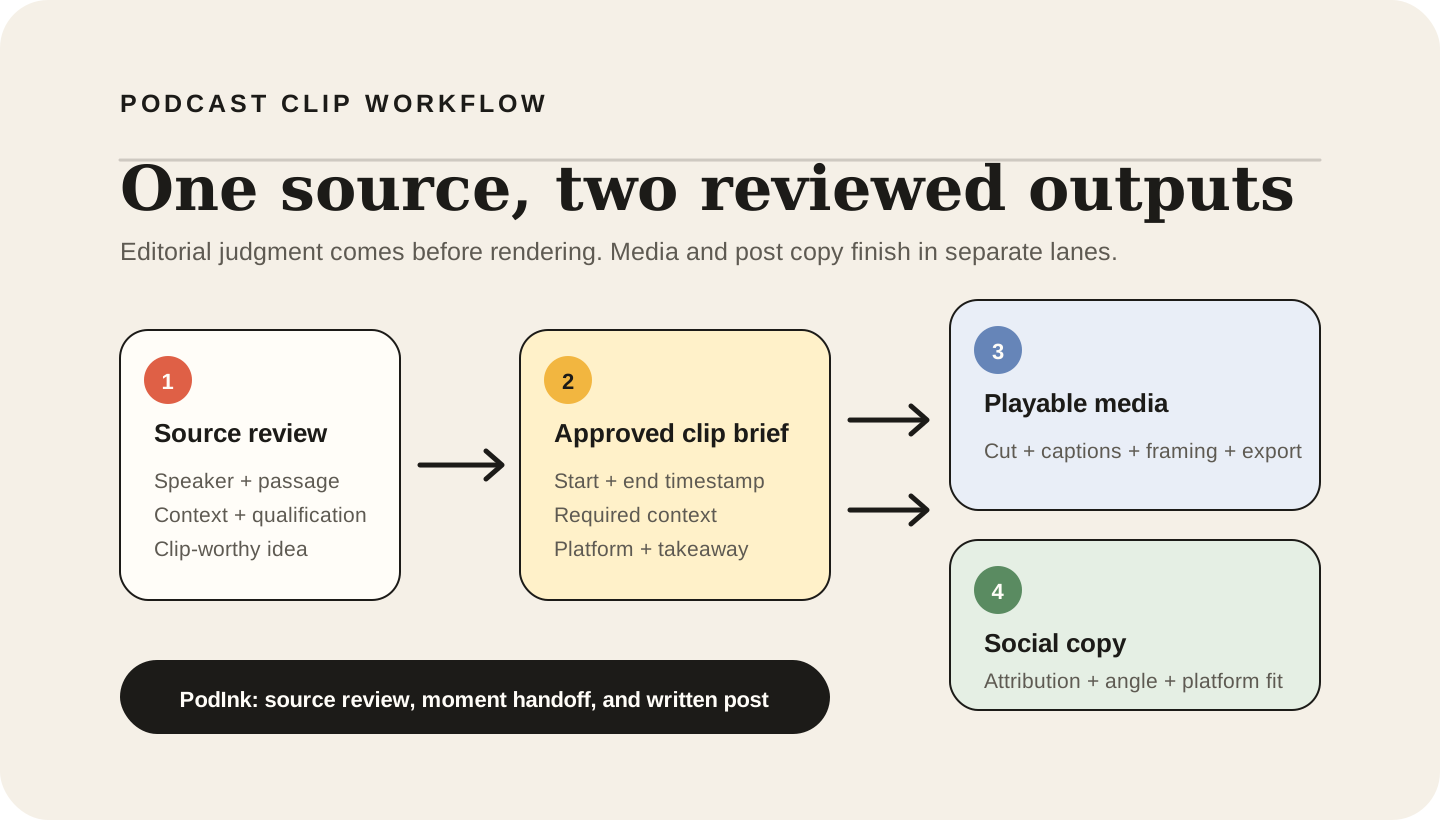
Compare how the approved core changes in the LinkedIn workflow and the X workflow.
Export acceptance
Review the version a viewer will actually receive
| Review surface | Check | What remains outside that check |
|---|---|---|
| Original source and final export | Compare wording, speaker order, relevant delivery, and retained qualifications. | Whether the speaker’s underlying claim is independently true. |
| Video with attached text hidden | Check whether the excerpt preserves its scope and identifies its subject. | Whether the separate social copy is accurate. |
| Muted video with timed captions | Check that speech and necessary sounds remain understandable in readable, synchronized text. | An audio accuracy check; compare captions with the recording as well. |
| Title, thumbnail, and attached copy | Check that none promises a broader claim than the media supports. | Permission to reuse the media, platform acceptance, or future performance. |
- Every meaning-changing dependency has a place in the selected media.
- Editorial additions are labeled and separate from the caption track.
- The source question and respondent are not merged into one viewpoint.
- Exact cut points and duration come from media review, not transcript estimates.
- The final export has been checked against the source and without the attached post.
Evidence boundaries
What this editing plan has not established
- The example uses an official written transcript. No audio, video, delivery, exact boundaries, subtitle file, or media export was reviewed.
- The bad hook and both production packages are teaching examples, not statements that an actual publisher made these edits.
- The placement rules are editorial recommendations. This guide does not establish a universal clip length, a platform policy, audience response, or a complete accessibility assessment.
- Accurate attribution does not independently establish the truth of a speaker’s advice or authorize reuse of a recording.
Human review remains necessary. No repurposing workflow can turn weak evidence into a strong claim.
FAQ
Frequently asked questions
Can a text overlay replace the question before an answer?
Sometimes an accurate editorial label can identify a topic. Keep the original question when its premise, wording, uncertainty, or speaker relationship determines the answer’s meaning. Do not make a new question look like the question the speaker answered.
Can I put the missing context in the post caption?
Put credit, a source link, and optional background there. If the missing detail changes the excerpt’s meaning, restore it in the media or choose another passage. The attached text may not be present wherever the video is viewed.
How much longer should I make the clip?
Extend it until the necessary setup and qualification are intact, then assess the actual media. There is no duration in this guide that guarantees context. Choose another excerpt if the required exchange does not fit your intended format.
Is a transcript enough to approve a clip?
A transcript can support an editing plan. It cannot confirm delivery, word-aligned cut points, caption synchronization, or the final exported media. Keep those checks pending until the specific recording and export are reviewed.
Evidence
Sources and comparison pages
- Three Guiding Principles for Successful CommunicationStanford Graduate School of Business — Think Fast, Talk Smart
- Telling the StoryThe Associated Press
- Captions/SubtitlesW3C Web Accessibility Initiative